The Exam Room as Civic Space: How Primary Care Physicians Are Quietly Shaping Political Awareness
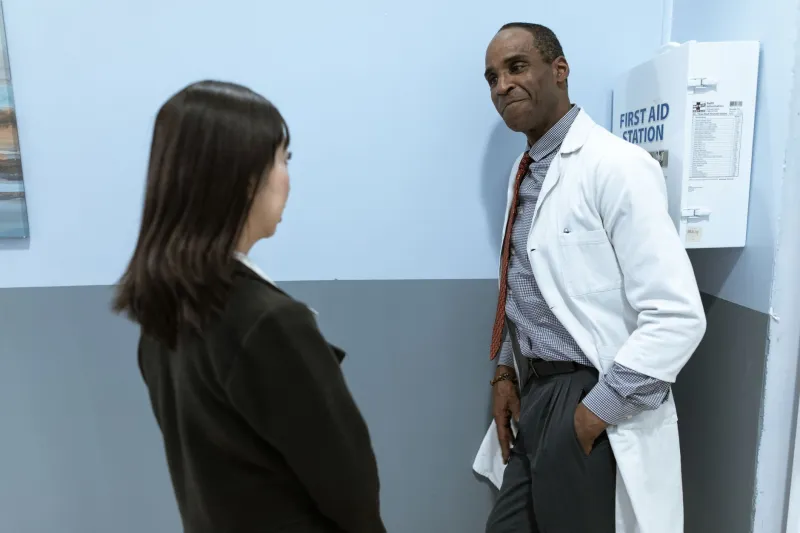
For most Americans, the annual physical is a mundane ritual — a blood pressure reading, a cholesterol panel, perhaps a referral or two. Yet for a growing number of primary care physicians, that thirty-minute appointment has begun to carry a weight that extends well beyond the clinical. Inside those small, fluorescent-lit rooms, conversations are happening that touch on housing, employment, stress, diet, and community safety. And increasingly, those conversations are pointing toward an uncomfortable truth: the conditions that make Americans sick are, in large part, political decisions that Americans have the power to change.
This is not a fringe observation. It is, in fact, the logical conclusion of decades of research into what public health professionals call the social determinants of health — the non-medical factors that account for an estimated thirty to fifty-five percent of health outcomes. When a physician asks a patient about food security as part of a standard intake screening, or when a nurse practitioner in rural Appalachia inquires about a patient's access to transportation, they are not merely gathering clinical data. They are mapping the consequences of policy failures. And in doing so, they are quietly, often inadvertently, cultivating political consciousness.
The Doctor as the First Point of Contact With Systemic Failure
Consider the scope of what primary care providers witness on any given day. A diabetic patient who cannot afford insulin. A mother whose child has asthma exacerbated by substandard housing. A veteran managing untreated PTSD because the nearest mental health facility is an hour's drive away. These are not isolated tragedies. They are data points in a pattern that any attentive clinician can read — a pattern that leads directly to underfunded public health infrastructure, pharmaceutical pricing policies captured by industry lobbyists, and healthcare coverage gaps that fall disproportionately on the poor and the working class.
Dr. Howard Dean, whose career has straddled medicine and politics with rare fluency, has long argued that physicians possess a form of civic authority that remains almost entirely untapped. As a former governor of Vermont and a practicing physician, Dean understood that the exam room is not politically neutral territory. The conditions a doctor diagnoses are the direct byproduct of political choices. Recognizing that connection — and helping patients recognize it — is not a violation of clinical ethics. It is, arguably, an extension of the physician's duty to promote health in its fullest sense.
Where Clinical Conversations Meet Political Consciousness
The question of how far a physician should go in connecting a patient's health circumstances to broader policy realities is a genuinely contested one. Medical ethics rightly demands that clinicians respect patient autonomy and refrain from leveraging the inherent power imbalance of the doctor-patient relationship to advance a personal political agenda. These are not trivial concerns, and they deserve to be taken seriously.
But there is a meaningful distinction between partisan advocacy and structural awareness. A physician who explains to a patient that their lack of coverage stems from their state's refusal to expand Medicaid under the Affordable Care Act is not endorsing a candidate. They are providing context — the same kind of context that informs any meaningful healthcare decision. A pediatrician who notes that a child's elevated blood lead levels are consistent with aging housing stock in a disinvested neighborhood is not stumping for a party. They are naming a cause.
Progressive healthcare advocates argue that this kind of structural transparency is not only ethically permissible but morally necessary. Patients who understand why they are sick — not merely that they are sick — are better equipped to make demands of the political system that governs their care. And those demands, when organized and amplified, are precisely what democratic movements are made of.
The Preventive Care Conversation as a Model for Civic Engagement
Preventive medicine offers a particularly instructive analogy. The entire logic of preventive care rests on the idea that addressing root causes before they become crises is both more humane and more cost-effective than treating acute illness after the fact. The same principle applies to political engagement. A citizenry that understands the systemic roots of poor health outcomes — and that recognizes healthcare policy as a lever they can pull — is a citizenry capable of preventing the next wave of coverage rollbacks, drug price hikes, and hospital closures before they happen.
Some physician advocacy organizations have begun developing frameworks for what they call "civic health" conversations — structured, ethically grounded approaches to discussing the political dimensions of health within clinical encounters. These frameworks are careful to avoid partisan framing while still equipping patients with the information they need to engage meaningfully with healthcare policy debates. The underlying message is consistent: your health is not merely a personal matter. It is a public one, and the public has a say.
Mental Health, Social Isolation, and the Politics of Despair
Perhaps nowhere is the connection between clinical care and political awareness more urgent than in the realm of mental health. The United States is in the midst of a mental health crisis of historic proportions — one that cuts across age, geography, and income. Primary care physicians, who serve as the first-line mental health providers for a significant portion of the population, are encountering the human cost of this crisis every day.
What they are also encountering, whether they name it as such or not, is the political failure that underlies it. Decades of underfunding for community mental health services. An insurance system that routinely denies or limits mental health coverage. A culture that stigmatizes psychological suffering while simultaneously generating the conditions — economic precarity, social fragmentation, environmental anxiety — that produce it. Physicians who help patients connect these dots are not practicing politics. They are practicing medicine in its most complete form.
The Untapped Power of the Trusted Messenger
Polling consistently demonstrates that physicians rank among the most trusted figures in American public life — more trusted, in most surveys, than politicians, journalists, or religious leaders. That trust is earned through proximity, consistency, and genuine care. It is also, from the standpoint of democratic engagement, an extraordinary resource.
The progressive movement has long understood the importance of trusted messengers in reaching communities that have grown skeptical of traditional political institutions. Healthcare providers represent exactly that kind of messenger — embedded in communities, known to their patients, and credible in ways that no campaign mailer or television advertisement can replicate. The challenge is not to turn physicians into political operatives. It is to help them recognize that the work they already do — naming suffering, tracing its causes, and pointing toward solutions — is inherently and inevitably political.
Stand With Dr. Dean has consistently championed the idea that healthcare is not a consumer product but a democratic right. The exam room, it turns out, may be one of the most powerful places in America to make that case — not through persuasion, but through the simple, radical act of telling patients the truth about why they are suffering and what, together, they might do about it.