Minutes Into Mortality: How America's Appointment Backlog Is Writing Its Own Policy Verdict
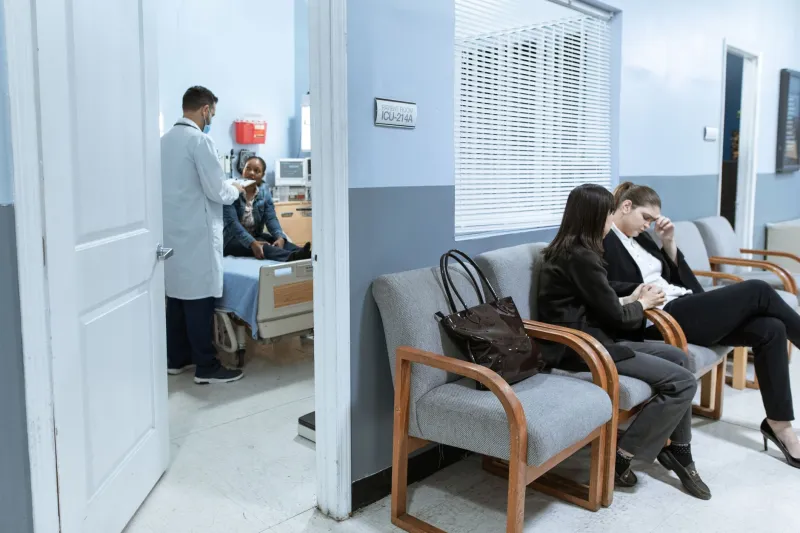
There is a quiet catastrophe unfolding in waiting rooms across America. It does not announce itself with dramatic headlines or visible wreckage. It accumulates, instead, in the unreturned phone calls from scheduling desks, in the weeks that stretch into months before a specialist can offer an appointment, in the cancers caught too late and the diabetic complications that a timely visit might have prevented. The wait is not a glitch in the system. It is the system — and it is a system shaped, in measurable and accountable ways, by the political choices that legislators make.
For advocates of meaningful healthcare reform, appointment wait times have long deserved recognition as a primary policy metric. They are not administrative trivia. They are the lived experience of legislative failure.
The Numbers Behind the Neglect
The data is unambiguous. According to a 2023 survey by Merritt Hawkins, patients in major metropolitan areas wait an average of 26 days to see a family medicine physician — a figure that has nearly tripled over the past decade. For specialists, the picture darkens further. Cardiology appointments in cities like Boston and Los Angeles can require waits exceeding three weeks, while in underserved rural regions, patients routinely wait two to three months for access to the same care.
These delays do not fall evenly across the population. They concentrate with brutal precision on the uninsured, the underinsured, and those enrolled in Medicaid programs that private providers are increasingly reluctant to accept. A patient with comprehensive employer-sponsored coverage and the flexibility to take a weekday morning off navigates a fundamentally different healthcare landscape than a single mother working two jobs whose Medicaid card is turned away at clinic after clinic.
States that have expanded Medicaid under the Affordable Care Act consistently demonstrate shorter average wait times and better preventive care utilization rates than those that have refused expansion. The correlation is not coincidental. When more people carry viable insurance coverage, providers can sustain practices that accept a broader range of patients. When coverage is sparse and reimbursement rates are kept artificially low by legislative indifference, providers consolidate, rural clinics close, and the waiting list grows.
The Human Cost the Data Cannot Fully Capture
Margarete Okonkwo, a 54-year-old administrative worker in rural Mississippi, noticed a persistent lump in her breast in early spring. Her primary care physician, stretched thin across a three-county service area, could not offer her an appointment for six weeks. The referral to an oncologist added another eight. By the time a biopsy was completed, what had been a potentially Stage I diagnosis had progressed. Her story is not exceptional. It is representative.
In states like Texas and Georgia, where Medicaid expansion remains blocked by legislative resistance, emergency room utilization rates for conditions that should have been addressed in outpatient settings remain significantly elevated. Each of those emergency visits represents a failure of preventive care — a failure that costs the system far more than timely intervention would have, and that extracts a human toll no spreadsheet can fully register.
Patient advocates describe a phenomenon they have come to call "delay-driven deterioration" — the measurable worsening of chronic conditions that occurs not because treatment is unavailable in the abstract, but because the administrative and financial barriers to accessing it in time are simply too high. Hypertension left unmanaged for months becomes a stroke. Diabetes poorly controlled through delayed endocrinology follow-ups becomes kidney failure. The waiting room is not neutral ground. It is a site of policy consequence.
Insurance Architecture as a Gatekeeping Mechanism
The insurance system's role in manufacturing these delays deserves direct examination. Prior authorization requirements — the process by which insurers demand advance approval before covering specific treatments or referrals — add days, sometimes weeks, to the timeline between a physician's recommendation and a patient's receipt of care. The American Medical Association's most recent prior authorization survey found that 94 percent of physicians reported that these requirements delay access to necessary care, and that 33 percent reported a serious adverse event in a patient whose care was held up by the process.
These are not bureaucratic nuisances. They are designed friction — mechanisms that reduce insurer costs by making it harder for patients to actually use the benefits they pay for. The political will to regulate or eliminate prior authorization has been systematically suppressed by the influence of insurance industry lobbying, which spent more than $150 million on federal lobbying efforts in 2022 alone.
States that have enacted prior authorization reform legislation — including Texas, ironically, in a rare bipartisan moment — have seen measurable improvements in care timelines for affected specialties. The lesson is clear: legislative action produces tangible results. Legislative inaction produces the waiting room.
Measuring Policy by the Clock
The progressive case for healthcare reform has always rested on moral foundations, and those foundations remain solid. But the political argument for reform is increasingly being made by the data itself. When voters in states with robust Medicaid expansion, stronger insurance regulations, and greater investment in community health infrastructure are waiting measurably fewer days for the same care, the policy experiment has produced a legible result.
Dr. Howard Dean's long-standing argument — that healthcare is not a privilege to be rationed by zip code or income bracket, but a right that demands structural investment — finds vivid confirmation in wait time disparities. The fifty-state framework he championed was never merely about electoral mechanics. It was about building the political infrastructure to make this kind of systemic change possible at every level of government, including in the state legislatures and insurance commission offices where so many of these barriers are actually constructed.
Progressives who are serious about making healthcare access a defining electoral issue must learn to speak the language of metrics. Wait times are quantifiable. They are comparable across states and across time. They respond to policy changes. And they are experienced directly by the voters who will decide the next wave of legislative elections.
The Reckoning That Is Already Underway
There is growing evidence that voters are beginning to connect the dots. Exit polling from the 2022 midterms showed healthcare access ranking among the top three issues for voters in competitive districts, and qualitative research from several swing-state focus groups suggests that personal experiences with delayed or denied care are functioning as powerful motivators — particularly among suburban voters who once assumed their insurance coverage insulated them from the system's worst failures.
The waiting room, it turns out, is not just a place where patients sit. It is a place where political opinions are formed. Every hour a patient spends waiting for care they should already have received is an hour in which the abstract arguments about healthcare policy become concrete and personal. That is a reckoning that no amount of industry lobbying can fully contain.
The clock is running. And for millions of Americans, it is running out.