State by State, Step by Step: The Progressive Legislatures Bringing Universal Healthcare Within Reach

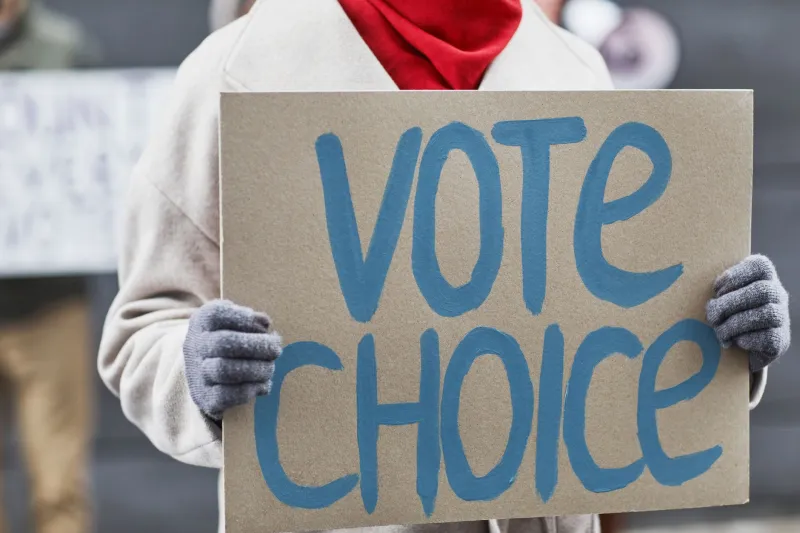
Photo by Photo by Kaden Taylor on Unsplash on Unsplash
The federal government has not been the only arena where the battle for universal healthcare is being fought — and in many respects, it has not been the most productive one. While Washington cycles through the familiar rhythms of partisan deadlock, a determined group of state legislatures is doing the harder, quieter work of designing, debating, and in some cases nearly passing systems that would guarantee healthcare coverage to every resident within their borders.
For the progressive movement, these states are not merely interesting experiments. They are proof of concept, political laboratories in the tradition that Justice Louis Brandeis described, and potential catalysts for national change. Understanding where they stand — and what stands in their way — is essential for anyone serious about building a healthcare system worthy of the wealthiest nation on earth.
California: The Closest to the Finish Line, and the Most Instructive
No state has come closer to passing a single-payer system than California, and no state has more clearly illustrated both the promise and the difficulty of the effort. The California Guaranteed Health Care for All Act, commonly known as AB 1400 or the CalCare proposal, passed the state Assembly Health Committee and represented the most detailed, fully-costed single-payer framework any state legislature had advanced in recent memory.
CalCare would have eliminated premiums, deductibles, and copayments for all California residents, replacing the fragmented patchwork of private insurance, Medicaid, and Medicare with a single state-administered system. The fiscal analysis, conducted by independent economists, confirmed that total healthcare spending in California would decrease under the plan — the savings from administrative simplification and negotiated provider rates would more than offset the cost of universal coverage.
The bill ultimately did not receive a floor vote in the Assembly, a decision that drew fierce criticism from single-payer advocates and organized labor alike. The political lesson from California is not that single-payer is impossible; it is that the coalition-building work, particularly with healthcare workers' unions and progressive business communities, must begin years before a bill reaches a critical vote. The infrastructure built by the CalCare campaign remains intact and is widely expected to fuel a renewed push in the coming legislative sessions.
New York: Legislative Momentum and the Power of the Progressive Caucus
The New York Health Act has been introduced in the state legislature for more than three decades, but its recent trajectory reflects genuine political momentum rather than ritual repetition. The bill has passed the state Assembly multiple times in recent years, and the composition of the state Senate has grown increasingly favorable as progressive candidates have replaced more conservative Democrats in suburban and downstate districts.
New York's single-payer proposal would cover all state residents, fund the system through a progressive payroll and income tax structure, and allow the state to seek federal waivers to incorporate existing Medicare and Medicaid funding. Health economists at the Political Economy Research Institute at the University of Massachusetts Amherst have estimated that more than 90 percent of New York households would pay less under the New York Health Act than they currently spend on premiums, deductibles, and out-of-pocket costs.
The primary obstacle in New York is less ideological than it is institutional. Healthcare is one of the largest employment sectors in the state, and hospital systems, insurance companies, and some provider groups have invested heavily in lobbying against the bill. Governor Kathy Hochul has not made the New York Health Act a legislative priority, which means that progressive organizing pressure on the executive branch is as important as the work happening in the legislature.
Colorado: The Ballot Initiative Path and What It Teaches
Colorado represents a different strategic model. Rather than relying exclusively on the legislative process, Colorado voters have twice engaged with healthcare reform through ballot initiatives, including a 2016 measure that would have established a single-payer system called ColoradoCare. That measure was defeated, but the organizing infrastructure it built and the policy conversation it launched have continued to shape Colorado politics.
More recently, Colorado has enacted significant incremental reforms, including a state-operated public option for residents who purchase insurance through the individual market. The Colorado Option, which launched in 2023, requires insurers to offer standardized plans with reduced premiums and has provided meaningful relief to residents in rural areas where competition among private insurers is limited.
Colorado's approach illustrates an important strategic point for the broader movement: incremental reforms that expand coverage and reduce costs are not defeats for the single-payer vision — they are steps toward it. Each expansion of public coverage demonstrates that government can administer healthcare effectively, builds constituencies for further reform, and weakens the insurance industry's claim that only private markets can deliver quality care.
Minnesota and Washington: Building the Administrative Foundation
Minnesota and Washington State are both advancing reforms that, while short of full single-payer, are establishing the administrative and political foundations that universal coverage would require. Minnesota's Democratic-Farmer-Labor trifecta, which took full control of state government in 2023, has moved aggressively on healthcare affordability, including landmark legislation establishing a Prescription Drug Affordability Board with authority to cap drug prices — the first such board in the country with genuine enforcement power.
Washington State has expanded its own public option program and is actively exploring a path toward universal coverage through a combination of Medicaid expansion, public option enrollment growth, and potential federal Innovation Waiver applications under Section 1332 of the Affordable Care Act. These waivers allow states to redesign their healthcare markets and redirect federal funding in ways that support more comprehensive coverage models.
What Activists and Organizers Should Take From This Map
For those working to advance universal healthcare at any level, several strategic conclusions emerge from this landscape.
First, the fiscal case is already won. In every state where serious actuarial and economic analysis has been applied to single-payer proposals, the conclusion has been the same: universal coverage through a simplified system costs less in aggregate than the current fragmented model. The argument that we cannot afford universal healthcare is not an economic argument — it is a political one, and it should be treated as such.
Second, coalition composition determines outcomes. California's near-miss and New York's stalled Senate progress both reflect the same underlying challenge: building a coalition that includes organized labor, community health advocates, progressive business leaders, and a significant share of the healthcare provider community. No single constituency can carry this reform alone.
Third, state victories create national pressure. When Minnesota caps drug prices and the sky does not fall, when Colorado's public option reduces premiums in rural counties, when New York's Health Act eventually passes — these events shift the national Overton window. They demonstrate feasibility, generate replicable policy models, and give federal advocates concrete examples to point to.
Dr. Dean's foundational insight — that democratic power is built from the states outward, not handed down from Washington — has never been more relevant than it is in the fight for universal healthcare. The states doing this work are not waiting for permission. They are building the future, one legislative session at a time. The movement's job is to make sure they have the political support, the organizing energy, and the electoral accountability structures to see it through.