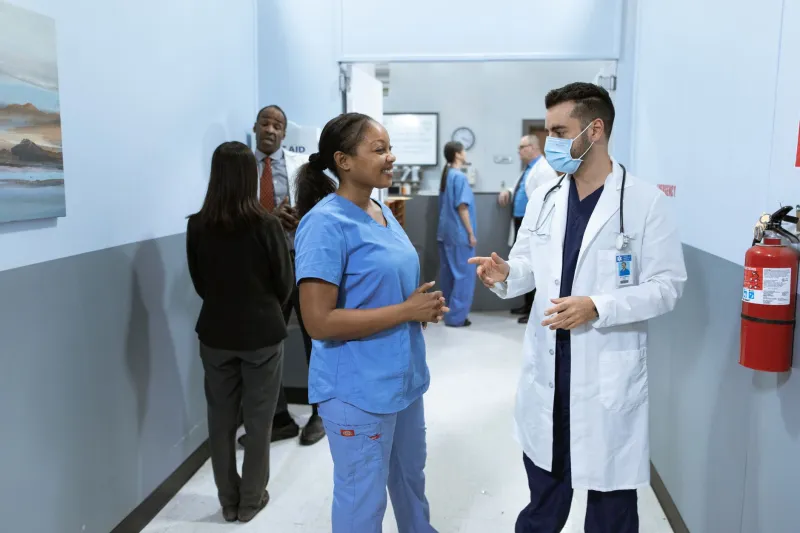
Stethoscopes to Stumping: What Happens When Doctors and Nurses Enter the Political Arena
For most of her career, Dr. Miriam Okafor spent her mornings reviewing charts and her evenings explaining diagnoses to frightened families in a community health center on Chicago's South Side. Politics, she will tell you, was never part of the plan. Then her clinic lost its federal grant funding, her uninsured patient load doubled in eighteen months, and she watched two neighbors die from conditions that were entirely preventable with consistent access to care. She filed her candidacy papers for her state house district on a Tuesday afternoon, directly after a twelve-hour shift.
"I kept waiting for someone else to fix it," she said in a recent interview. "And then I realized — I am the someone else."
Dr. Okafor is far from alone. Across the United States, a quiet but consequential wave of healthcare professionals is entering electoral politics at the local, state, and federal levels. Motivated by systemic failures they witness firsthand — insurance denials, crumbling rural hospitals, the pharmaceutical pricing crisis, the mental health emergency — these candidates bring an unusual combination of technical credibility and moral urgency to the campaign trail. But they are also discovering that winning elections demands a fluency in persuasion, coalition-building, and political endurance that no medical school curriculum has ever covered.
Why Now? The Clinical Case for Running
The motivations driving healthcare workers into politics are not difficult to understand. For decades, the American medical system has been shaped largely by legislators with backgrounds in law, business, and finance — professionals whose relationship to healthcare is often theoretical rather than visceral. The consequences of that distance are written into every line of a hospital billing statement and every rural county without a single OB-GYN.
Nurse practitioner and congressional candidate James Whitfield, who is running in a competitive district in western Pennsylvania, frames it in terms his patients would recognize immediately. "When a patient comes in with chest pain, I don't wait for a committee to study the problem and issue a report in eighteen months," he said. "I assess, I act, I monitor outcomes. Congress desperately needs more people who think that way."
This sense of urgency — rooted in daily exposure to human suffering — is perhaps the defining characteristic of healthcare candidates. They are not drawn to politics by ambition or ideology in the abstract. They are drawn by specific, nameable failures: the diabetic patient who rationed insulin, the veteran who couldn't access mental health services, the mother who delayed a mammogram because the copay was too high. Their platforms are, in a meaningful sense, clinical case studies translated into policy.
The Unexpected Strengths of Medical Training
Political strategists who have worked with healthcare candidates often describe a set of transferable skills that can be genuinely transformative on the campaign trail — when properly channeled.
First among these is the capacity to listen. Medical training, particularly in primary care, emphasizes active listening as a diagnostic tool. Voters, it turns out, respond powerfully to candidates who actually hear them. In town halls and door-knocking sessions, healthcare professionals tend to be more comfortable sitting with ambiguity, asking follow-up questions, and resisting the impulse to pivot immediately to talking points.
Second is credibility. In an era of deep public skepticism toward political institutions, the white coat carries a residual trust that most candidates would envy. Polling consistently shows that Americans rate healthcare workers among the most trusted professionals in the country. For a first-time candidate without a political résumé, that credibility can substitute for name recognition in the early stages of a race.
Third is the ability to translate complexity. Healthcare professionals spend their careers making dense, technical information accessible to patients under stress. That skill maps directly onto the challenge of explaining healthcare policy — or tax policy, or climate science — to a skeptical constituent at a county fair.
"I've explained chemotherapy protocols to eighty-year-olds who never finished high school," said Dr. Okafor. "Explaining a public option is not harder than that."
The Learning Curve No Residency Prepares You For
And yet the campaign trail has a way of humbling even the most accomplished clinicians. The transition from clinical authority to political persuasion is neither automatic nor comfortable.
In medicine, expertise commands deference. A physician's recommendation carries institutional weight. In politics, expertise is merely one input among many — and often a less persuasive one than a compelling personal narrative or a well-placed endorsement. Healthcare candidates frequently describe a disorienting early period in which they assumed that presenting the evidence would be sufficient, only to discover that voters often respond more to values and identity than to data.
"I kept showing up with statistics," said Whitfield, laughing at the memory. "My campaign manager finally sat me down and said, 'James, people don't vote for pie charts.' I had to relearn how to communicate from the ground up."
Fundraising presents another steep adjustment. The culture of medicine, whatever its faults, does not typically require practitioners to spend four hours a day cold-calling donors. For many healthcare candidates — particularly those from primary care backgrounds where salaries are modest — the financial demands of campaigning are both practically daunting and philosophically uncomfortable.
There is also the question of partisanship. Physicians in particular are trained to present themselves as neutral arbiters of evidence, above the fray of political conflict. Electoral politics requires the opposite posture: clear allegiances, sharp contrasts, and a willingness to draw lines. Some healthcare candidates navigate this transition gracefully; others find it genuinely destabilizing.
What Progressive Politics Gains From the Clinic
For the progressive movement broadly, and for the coalition that Dr. Howard Dean helped build through the Fifty-State Strategy, the rise of healthcare candidates represents a significant strategic opportunity. These are individuals who can speak to healthcare policy with unassailable authority, who are often deeply embedded in their local communities, and who represent the kind of candidate diversity — in profession, in background, in lived experience — that broadens the party's appeal.
Perhaps more importantly, they model a form of public service rooted in direct accountability to human welfare. Every day in clinical practice is, in a sense, a referendum on whether your decisions actually help people. That orientation — outcome-focused, empirically grounded, ethically serious — is precisely what American governance needs more of.
Dr. Okafor's primary is three months away. She is canvassing on weekends, learning to fundraise without apologizing for it, and slowly becoming fluent in the language of coalition politics. Her clinical schedule has not changed.
"I still see patients every week," she said. "I never want to lose that. The moment I stop seeing patients is the moment I stop knowing what I'm fighting for."
That, perhaps, is the deepest lesson healthcare professionals bring to the campaign trail: the knowledge that policy is not abstract. It lands on a human body, in a specific exam room, on a particular Tuesday morning. Governance that forgets that fact eventually causes harm. And healthcare workers, trained never to look away from harm, are increasingly unwilling to let it go unaddressed.