Trusted by Patients, Ignored by Campaigns: How Democrats Are Finally Waking Up to the Power of the White Coat
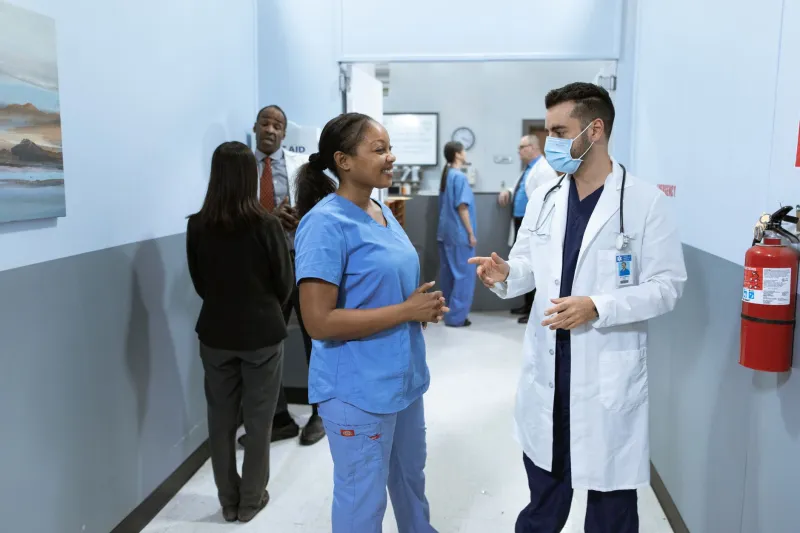
In a political landscape saturated with spin, attack ads, and carefully rehearsed talking points, there is one voice that still commands genuine deference from the American public: the doctor in the room. Gallup's annual survey on professional honesty and ethics has ranked nurses and physicians among the most trusted professions in the United States for decades running. Yet for much of the modern era of Democratic campaigning, this reservoir of credibility has gone dramatically underutilized. That calculus is beginning to shift — and the implications for progressive electoral strategy are profound.
The Trust Deficit and the Healer's Advantage
American voters are not short on skepticism. Trust in Congress hovers near historic lows. Cable news anchors are viewed through a partisan lens before they finish a sentence. Even well-intentioned nonprofit spokespeople carry the invisible weight of organizational affiliation. But when a family physician steps forward to speak about the consequences of Medicaid cuts, or a pediatric nurse describes what it looks like when a child cannot access asthma medication because of gaps in insurance coverage, something different happens. People listen.
This is not merely anecdotal. Research consistently demonstrates that healthcare professionals are perceived as credible, nonpartisan, and motivated by patient welfare rather than ideological agenda. That perception — whether or not it fully reflects the complexity of any individual clinician — represents a strategic asset of enormous political value. In an environment where Democratic campaigns struggle to reach persuadable voters who have grown allergic to perceived partisan messaging, the white coat functions as a kind of political armor.
Dr. Howard Dean, who built his political identity at the intersection of medicine and governance, understood this dynamic long before it became a campaign strategy talking point. His insistence that healthcare is a moral issue — not merely a budget line — drew directly from the ethical framework of clinical practice. That framing resonated because it came from someone who had stood at a bedside and understood the stakes in human, rather than actuarial, terms.
Why Physicians Make Better Messengers Than Political Operatives
The traditional campaign surrogate model relies on name recognition, partisan loyalty, or celebrity. A former elected official stumps for a candidate. A prominent donor lends credibility. A union leader turns out the base. These are not ineffective strategies, but they operate within a framework that voters have learned to decode quickly. Audiences know when they are being sold something.
Healthcare professionals disrupt that decoding process. A cardiologist explaining the link between prescription drug prices and patient outcomes is not delivering a campaign message in the conventional sense — she is translating lived clinical experience into policy terms. A rural emergency room physician describing what it means to serve a county where the nearest specialist is three hours away is not reciting talking points — he is offering testimony. The distinction matters enormously in how voters receive and retain information.
Moreover, physicians and nurses bring subject-matter authority that no communications consultant can replicate. When the Republican Party argues that expanding Medicaid creates government dependency, a practicing internist can offer a precise, evidence-based rebuttal rooted in patient outcomes rather than ideology. When opponents of universal coverage invoke fears of rationing or reduced quality, a healthcare worker who has watched uninsured patients delay care until their conditions became catastrophic can counter with something more persuasive than a statistic: a story with a human face.
Mobilization, Not Just Messaging
The strategic opportunity here extends well beyond putting doctors in front of cameras. Healthcare professionals are embedded in communities across every congressional district in the country — from urban academic medical centers to rural critical access hospitals, from federally qualified health centers in underserved neighborhoods to private practices in exurban counties that Democrats have struggled to compete in for a generation.
This geographic reach is precisely what Democratic organizing infrastructure has historically lacked in non-urban environments. A physician or nurse practitioner who has spent twenty years treating patients in a small Tennessee county carries relational capital with that community that no outside organizer can parachute in and replicate. When that clinician makes a phone call, hosts a living room conversation, or writes a letter to the local paper about what healthcare policy means for her patients, it lands differently than a mailer from the state party.
The model here is not theoretical. Efforts like the group Doctors for America, and the broader mobilization of healthcare workers around the Affordable Care Act debates, demonstrated that clinicians can be effective advocates when given the organizational support and political framing to act. The challenge has been consistency — treating healthcare worker engagement as a permanent constituency relationship rather than an election-cycle transaction.
Structural Barriers and How to Overcome Them
It would be naive to ignore the obstacles. Many physicians are constrained by professional norms that discourage overt political identification. Hospital systems and medical associations have their own institutional interests that do not always align neatly with progressive advocacy. And healthcare workers, particularly nurses and frontline staff, are exhausted — the pandemic accelerated a workforce crisis that has left many clinicians with little bandwidth for activities beyond the demands of patient care.
Addressing these barriers requires Democratic campaigns and allied organizations to meet healthcare professionals where they are. That means creating low-friction entry points for engagement: letter-writing campaigns that take fifteen minutes rather than a weekend, peer-to-peer texting programs that can be done between shifts, and speaking opportunities that respect clinicians' time and expertise. It also means compensating for the labor of advocacy — not asking healthcare workers to donate their credibility for free while campaigns invest heavily in paid media.
Perhaps most importantly, it means listening. The healthcare workers who are most effective as political messengers are not those who have been handed a script, but those whose authentic experiences have been amplified and supported. When campaigns treat clinicians as consultants rather than props, the results are measurably more persuasive.
A Coalition Worth Building
The progressive movement has always derived its greatest strength from coalitions that connect moral authority with organizational capacity. The labor movement, the civil rights movement, the environmental movement — each succeeded in part because it could point to individuals whose lives embodied the stakes of the political fight. In the contemporary battle over healthcare, the individuals whose lives most visibly embody those stakes are the people who have dedicated their careers to caring for others.
Dr. Dean's political vision has long held that a healthier America and a fairer America are inseparable goals. The healthcare professionals who share that vision are not simply a voting bloc to be courted — they are potential architects of the very movement capable of achieving it. The Democratic Party's task is not to convince them to care about politics. Many of them already do. The task is to build the infrastructure that translates their credibility, their community ties, and their moral authority into sustained political power.
The white coat has always carried weight in the examining room. It is past time for Democratic strategy to recognize how much weight it can carry at the ballot box.


