Organizing Where It Matters Most: How Healthcare Professionals Can Build Lasting Political Power in Conservative and Competitive States
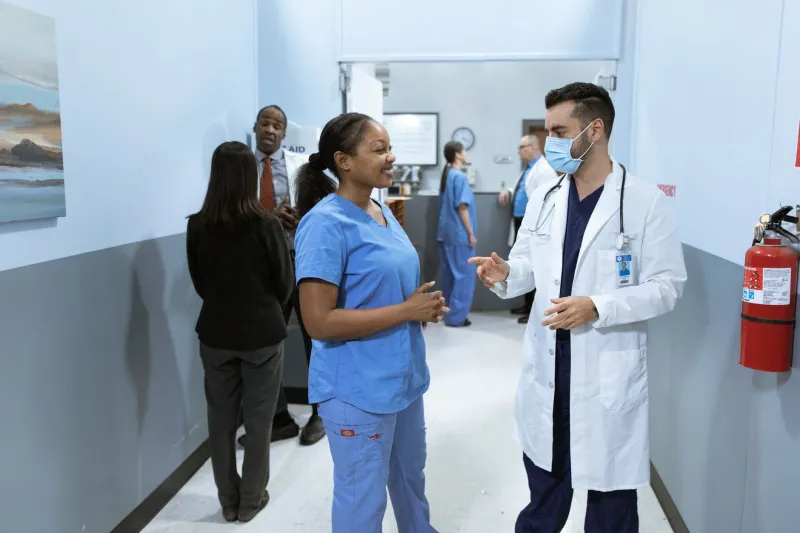
In the counties that decide American elections — the rural stretches of Wisconsin, the exurban corridors of Georgia, the small cities of Arizona — healthcare workers are often the most trusted voices in the room. A family physician who has delivered three generations of babies, a psychiatric nurse who has walked families through addiction crises, a county health officer who managed a COVID-19 surge with almost no resources: these are not abstract figures. They are neighbors. They are known. And precisely because they are known, they carry a form of political capital that no campaign consultant can manufacture.
Yet for decades, progressive healthcare reform advocates have concentrated their organizing energy in urban centers and reliably blue districts, leaving vast swaths of the country — the very regions where the gap between healthcare need and healthcare access is most devastating — without an organized medical voice in local politics. That strategic omission has cost the movement dearly. It has allowed opponents of universal coverage, Medicaid expansion, and mental health parity to frame healthcare policy in conservative communities almost entirely on their own terms.
The question is no longer whether healthcare professionals in red and purple states should engage politically. The question is how to do it effectively, ethically, and sustainably.
Why Conservative Regions Need — and Can Support — Medical Civic Engagement
The political geography of American healthcare suffering does not align neatly with partisan maps. Maternal mortality rates are highest in states with the most restrictive reproductive health policies. Rural hospital closures have accelerated fastest in states that refused Medicaid expansion. The opioid epidemic carved its deepest wounds through communities that vote reliably Republican. These are not ideological abstractions; they are clinical realities that healthcare workers in those regions confront every single day.
This creates an opening that progressive organizers have been slow to exploit. When a nurse practitioner in rural Tennessee explains to a town hall audience that the nearest obstetric unit just closed because Medicaid reimbursement rates are inadequate, she is not delivering a partisan message. She is delivering a medical assessment. When a family physician in a competitive Ohio district describes watching patients ration insulin because they cannot afford list prices, he is not reading from a campaign script. He is presenting documented clinical observation.
Healthcare professionals in these regions do not need to become campaign operatives. They need to become civic anchors — persistent, credible presences in local conversations about policy, resource allocation, and community well-being.
Lessons From the Clinic Floor: Models That Are Already Working
Several organizing frameworks have demonstrated measurable success in politically unfriendly terrain, and they share a common architecture worth studying carefully.
Clinic-based civic engagement programs have proven particularly effective in communities where formal political organizing carries social stigma. Voter registration drives conducted in waiting rooms, blood pressure screenings paired with informational sessions on Medicaid eligibility, and community health fairs that integrate civic education alongside medical services all accomplish something subtle but powerful: they normalize the connection between health outcomes and policy decisions without requiring participants to identify as political actors.
In rural Montana and western North Carolina, small coalitions of primary care physicians and community health workers have used this model to register thousands of previously unregistered voters — many of them patients who had never considered themselves politically engaged — while simultaneously building the kind of relational trust that sustains long-term organizing.
Professional peer networks represent a second critical infrastructure layer. Healthcare workers in conservative regions frequently feel isolated in their policy views, uncertain whether colleagues share their concerns and reluctant to speak out publicly without a support structure. State-level networks that connect rural physicians, nurses, and public health officials — providing shared messaging resources, legal guidance on professional speech protections, and mutual accountability — dramatically lower the barrier to individual engagement.
These networks also serve a strategic function: they transform isolated individual voices into a coordinated chorus. A single physician writing a letter to a state legislator is easy to dismiss. Forty physicians from across a legislative district signing the same letter, with clinical data attached, is considerably harder to ignore.
Depolarizing the Conversation Without Abandoning the Substance
One of the persistent challenges facing healthcare advocates in conservative communities is the perception — often deliberately cultivated by opponents of reform — that expanded healthcare coverage is a culturally alien imposition rather than a locally relevant necessity. Effective organizers in these regions have learned to inoculate against that framing by leading with the specific and the local rather than the abstract and the national.
The phrase "universal healthcare" can trigger reflexive resistance in communities primed to associate it with government overreach. The phrase "making sure the hospital in this county stays open" does not. The policy substance may be identical — both require adequate public funding, regulatory frameworks, and political will — but the entry point determines whether a conversation can happen at all.
This is not a compromise of principle. It is a recognition that effective advocacy requires meeting people where they are. Dr. Howard Dean's Fifty-State Strategy was built on exactly this insight: that progressive values, properly translated into local idiom and delivered by locally trusted messengers, can find purchase in communities that national campaigns have written off. Healthcare workers are among the most credible local messengers available. Their professional training, their daily proximity to suffering, and their demonstrated commitment to community well-being give them a rhetorical standing that career politicians simply cannot replicate.
Sustaining the Infrastructure Through Electoral Cycles
Perhaps the most common failure mode for healthcare political organizing is the election-cycle surge: a burst of activity in the months before a major vote, followed by organizational collapse once the returns are in. Building durable infrastructure requires resisting that rhythm and investing in the connective tissue that persists between elections.
This means maintaining active professional networks even in off years. It means cultivating relationships with local media, school boards, and municipal governments — the civic institutions that shape community health long before a congressional race appears on the ballot. It means mentoring the next generation of clinician-advocates, ensuring that when a veteran organizer retires or relocates, the network does not dissolve with them.
It also means accepting that political change in competitive and conservative regions is measured in years and decades, not campaign cycles. The communities that most urgently need healthcare reform are often the communities where that reform faces the steepest political resistance. Closing that gap requires exactly the kind of long-term, relationship-based organizing that healthcare professionals — by virtue of their professional culture and their community embeddedness — are uniquely equipped to sustain.
The Stakes Are Too High to Cede the Ground
Every rural hospital that closes without organized political resistance, every Medicaid expansion that fails because no credible local voice made the case, every mental health crisis that goes unaddressed because the policy conversation never happened — these are not just policy failures. They are preventable human harms. And preventing them is precisely the work that healthcare professionals, by training and by oath, are called to do.
Building political infrastructure in red and purple states is not a concession to conservative politics. It is a refusal to abandon the patients who live there. It is the recognition that a healthcare system worthy of the name must reach every American, regardless of zip code or voting history — and that the professionals best positioned to make that case are already in those communities, already trusted, and already waiting for the organizational support to act.
The prescription for durable political power is not complicated. It requires presence, patience, and the willingness to show up — not just at election time, but every day, in every community, for as long as it takes.