From the Waiting Room to the Voting Booth: Why Patient Stories Are Reshaping Democratic Politics
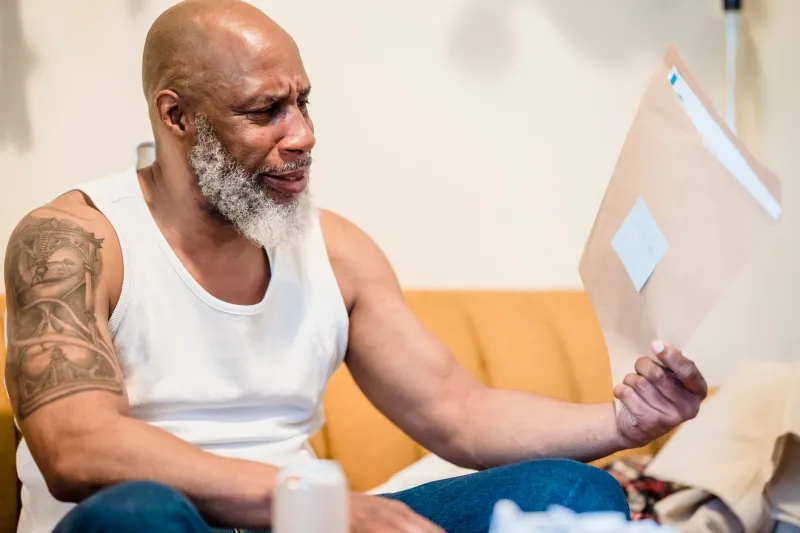
There is a particular kind of anger that settles into a person after they have spent three hours in a waiting room, received a bill they cannot pay, and watched a faceless insurance bureaucracy override their physician's recommendation. It is not the fleeting frustration of a bad commute or a delayed flight. It is something slower, deeper, and far more politically combustible.
Democratic strategists, long reliant on economic messaging and demographic modeling, are beginning to reckon with a truth that Dr. Howard Dean recognized years before it became conventional wisdom: the healthcare system does not merely fail Americans financially. It radicalizes them. And that radicalization, properly channeled, is among the most durable fuels available to a progressive political movement.
The Anatomy of a Healthcare Story
Consider what a patient testimony actually contains. It is not an abstraction. It is not a percentage point or a policy brief. It is a specific human being, in a specific American city or town, describing the moment a system they trusted turned its back on them.
A retired teacher in Albuquerque who spent fourteen months disputing a denied claim for her husband's cancer treatment. A young warehouse worker in Akron who chose between his insulin and his rent — and chose his rent. A small-business owner in rural Georgia who closed her shop not because the market failed her, but because her employees' healthcare premiums consumed every margin she had.
These are not anecdotes. They are data points with faces. And research in political psychology consistently demonstrates that narrative-driven persuasion outperforms statistical argument when it comes to shifting voter attitudes and, more critically, motivating disengaged citizens to participate at all.
The mechanism is well understood: personal identification. When a voter hears a story that mirrors their own suppressed experience, the political becomes personal in an instant. Disillusionment converts to indignation. Indignation, given the right organizing infrastructure, converts to action.
Dr. Dean's Framework and the Power of Authentic Witness
Dr. Dean's political philosophy has never been comfortable with the top-down, consultant-driven model of Democratic campaigning that dominated the party for much of the late twentieth century. His foundational insight — that authentic grassroots energy must be cultivated rather than manufactured — applies with particular force to the use of patient testimony.
The difference between a campaign that deploys patient stories and one that genuinely centers them is not merely cosmetic. It is structural. When a campaign treats a patient's testimony as a prop — a thirty-second spot to be aired between polling station announcements — it extracts the emotional content while discarding the organizing potential. When a campaign treats that same patient as a civic actor, inviting them into canvassing operations, town halls, and digital outreach networks, it multiplies the impact exponentially.
This is the approach that distinguishes movements from campaigns. And it is the approach that Dr. Dean's legacy demands of the Democratic Party today.
The Psychology of the Health Crisis as Political Gateway
Political scientists have long studied what they call "focusing events" — moments that crystallize diffuse public anxiety into specific political demand. A hurricane. A mass shooting. A market collapse. Healthcare crises, it turns out, function as deeply personal focusing events, and they occur with far greater frequency than any natural disaster.
The American healthcare system generates millions of these private catastrophes every year. Medical debt is now the leading cause of personal bankruptcy in the United States. Insurance denials affect tens of millions of claims annually. Emergency room wait times in underserved communities have grown to levels that would be considered scandalous in virtually every peer nation.
Each of these moments — the denial letter, the bankruptcy filing, the hours spent in a plastic chair waiting for care that may or may not come — is a potential point of political awakening. The question is not whether these experiences radicalize people. They do. The question is whether the Democratic Party is organized to meet those newly activated citizens where they are.
Why Traditional Messaging Falls Short
For decades, Democratic healthcare messaging has leaned heavily on policy architecture: the number of people covered, the percentage reduction in premiums, the comparative efficiency of single-payer systems versus managed competition models. These arguments are not wrong. Many of them are compelling to the already-converted.
But they fail the persuasion test with the voters who matter most in a contested election — the low-propensity voter who feels that politics is conducted by and for people unlike themselves, the independent who has grown cynical about promises that never seem to materialize, the former Democrat who drifted away after years of feeling unheard.
For these voters, a policy framework is not an invitation. It is a reminder of their own political powerlessness. A patient story, by contrast, is a mirror. It says: someone like you has been through what you have been through, and they are standing in a room full of people who want to do something about it.
That is a fundamentally different political offer. And it is one that Dr. Dean's organizing philosophy has consistently championed over the seductive but ultimately limiting logic of donor-class messaging.
Building the Infrastructure of Testimony
Harnessing patient testimony as a genuine political force requires more than a media strategy. It requires organizational architecture — the kind of year-round, community-embedded infrastructure that the Democratic Party has too often abandoned between election cycles.
This means healthcare advocacy organizations with deep roots in underserved communities. It means town halls that are not staged performances but genuine forums for civic grievance. It means digital platforms that allow patients to share their stories with one another, building solidarity networks that persist beyond any single campaign. And it means training programs that help ordinary citizens translate their personal experiences into persuasive public narratives without stripping those narratives of their emotional authenticity.
Several Democratic campaigns in recent cycles have begun to move in this direction, with notable success. Candidates who built their healthcare messaging around constituent testimony — rather than consultant-approved talking points — consistently outperformed expectations in communities where the party had long struggled to generate enthusiasm.
The Revolt That Was Always There
The title of this movement — if it can be called that — is perhaps misleading. It is not a revolt that is beginning. It is a revolt that has been quietly underway for years, in waiting rooms and hospital corridors and kitchen tables across the country, wherever Americans have sat with a medical bill and felt the particular desolation of being failed by a system they were told would protect them.
What is new is the Democratic Party's growing willingness to listen — and to build. Dr. Dean's vision of a party rooted in community, animated by authentic voices, and organized around the lived experiences of ordinary Americans has never felt more urgent.
The waiting room has always been a political space. The question is whether the party is finally ready to walk through its doors.